Nils Knudsen
The ChangelingNils Knudsen is the immigrant whose bargain with a troll carried the creature from Norway to Queens and began the Knudsen family’s generations-long pact. Jorgen Knudsen’s account presents him as both a father who surrendered one child to secure his family’s passage and a man who later raised seven children without repeating that sacrifice. His history complicates the distinction between familial care and violence: the same bargain that offered protection to some made a child’s life its price.
Identity and Migration
Nils’s story reaches the reader through Jorgen’s explanation to Apollo Kagwa, rather than through a scene in which Nils speaks or acts directly. He was in Norway when a group of Quakers planned to sail in a sloop. Nils doubted that the vessel was large enough to carry his family safely, and, in Jorgen’s account, sought insurance against the danger of beginning a new life at sea. The protection he secured was not an ordinary provision for the voyage but an agreement with a troll.
Nils brought his wife, Anna Sofie, and Petra Mikkelsdatter with him; the Sloopers continued upstate after reaching New York, while the three remained in Queens. Jorgen describes the area at the time as farmland, with thousands of acres of woods and open land. That terrain mattered to the bargain: creatures of the natural world, as Jorgen describes them, made lairs in forests and mountains, and the wooded landscape around Queens offered places for a large creature to hide. By 1898, land for the park had been bought and plans for golf courses and hiking paths were under way, but the hills still contained pockets and caves. The changing landscape could be made into a park without erasing the hiding places on which the old arrangement depended.
The Bargain and Agnes
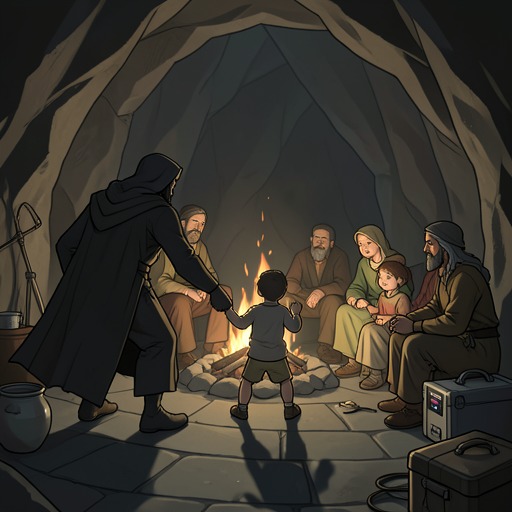
As part of the agreement, Nils became the troll’s caretaker, responsible for keeping it appeased. The creature demanded a child. When he could no longer defer payment, Nils took his daughter Agnes into the woods and delivered her to the cave. The account identifies this as an act committed by her father, not as an accidental separation: the child was the stipulated price of the protection he had obtained.
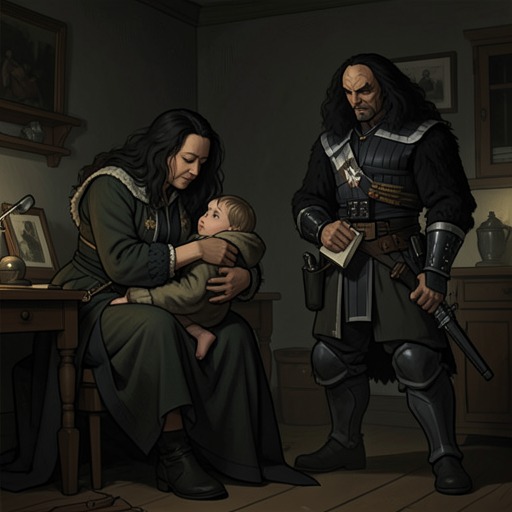
The consequences reached beyond Agnes. Jorgen says Nils learned that asking a mother to give up her child was difficult; Anna Sofie broke under the loss, went into the woods to search for her daughter, and never returned. Apollo suggests that she might have found Agnes and fled because her husband could not be trusted, but the account does not confirm that possibility. Anna Sofie’s fate remains unresolved, and Agnes’s abandonment leaves the family bargain visible as a rupture inside the household, not merely a pact between a man and a monster.
Petra and the Later Family
After Anna Sofie disappeared, Nils married Petra quickly and had seven children with her. He did not take those children into the woods. Jorgen presents this as a lesson Nils had learned, and says he likes to believe that making the sacrifice again would have been too difficult for him. That qualification matters: the account does not erase Nils’s responsibility for Agnes, nor does it offer certainty about what restrained him later. It records a changed practice alongside an unresolved moral history.
Jorgen also says that all seven children told stories of their father’s kindness. Their testimony sits uneasily beside the delivery of Agnes to the cave. Nils is therefore remembered through two forms of family history: the child he surrendered under the pact and the children who remembered him as kind. Neither account cancels the other. His later care may distinguish his treatment of Petra’s children from his treatment of Agnes, but it cannot undo what his bargain required of his first family.
The Children’s Portraits and the Legacy of the Pact
When Jorgen explains the family’s past, Apollo sees a wall of portraits arranged like a timeline: sketches and charcoal drawings give way to daguerreotypes, black-and-white photographs, and early color images. Every portrait is of an infant, none older than a year. The accumulated faces make the history larger than Nils’s immediate household. Apollo asks whether all these children were fed to the creature; Jorgen rejects that description, saying it tried to raise them. The explanation does not make the bargain harmless: the children remain bound to a system in which adults delivered them to the troll.
Asked whose children were used if Nils did not sacrifice his own later children, Jorgen points to Queens’ many immigrant families and their children, and defends the men who made such choices as people who helped the country thrive. His answer broadens the legacy from one father’s decision to a social order that treated immigrant children as expendable. The varied faces on the wall—children of different races—make the reach of that history visible, while the claim that Nils’s seven children remembered his kindness preserves the uncomfortable contrast at its center. Nils’s significance lies in that contradiction: he began the pact through an act of paternal betrayal, then lived as a father whose later children remembered affection rather than sacrifice.